Quick answer: Mold can begin growing on damp materials within 24–48 hours of water exposure, according to the EPA — which is why drying a water loss fast is the single best way to prevent it. Small areas (under about 10 square feet) are often a safe DIY cleanup; larger areas, or mold from contaminated water, call for professional remediation.
Mold is what unaddressed water leaves behind. It isn’t a random misfortune — it’s biology reacting to moisture, and after a water loss the clock starts fast. According to the EPA, it’s important to dry water-damaged areas and items within 24–48 hours to prevent mold growth.[1] That single window is the reason every water emergency is treated as a race to dry the structure before mold takes hold.
Why Mold Follows Water So Quickly
Mold spores are always present in the air. What they lack indoors is moisture — and a water loss supplies exactly that. As the EPA puts it, “the key to mold control is moisture control,” and “none of them will grow without water or moisture.”[3] Once porous materials stay damp, growth can begin within that 24–48 hour window, often in places you can’t see: inside wall cavities, under flooring, behind baseboards. By the time mold is visible or you can smell that musty odor, it has usually been underway for a while.
Key takeaway: The single most effective thing you can do to prevent mold is to dry everything fast. The EPA’s 24–48 hour window is the difference between drying out a water loss and remediating a mold problem.
What EPA and CDC Actually Say About Health
It’s worth being precise here, because mold is a topic where marketing tends to outrun the science. The CDC’s own wording is deliberately measured: “exposure to damp and moldy environments may cause a variety of health effects, or none at all.”[2] For people who are sensitive, the CDC notes exposure “can lead to symptoms such as stuffy nose, wheezing, and red or itchy eyes, or skin,” and that “people with asthma or who are allergic to mold may have severe reactions.”[2] Immune-compromised people and those with chronic lung disease can be more susceptible to infection.
The honest summary is this: mold is a real reason to act, but the effects are conditional and vary from person to person. We state what the agencies state — no more. If you have specific health concerns, the EPA’s own advice is to consult a health professional before starting any cleanup.
Prevention vs. Remediation
There’s a meaningful line between keeping mold from starting and removing it once it has:
- Prevention is moisture control. Fix leaks promptly, dry water damage within 24–48 hours, and keep indoor humidity below 60 percent — ideally between 30 and 50 percent, per the EPA.[1] (The CDC advises keeping it no higher than 50%.)
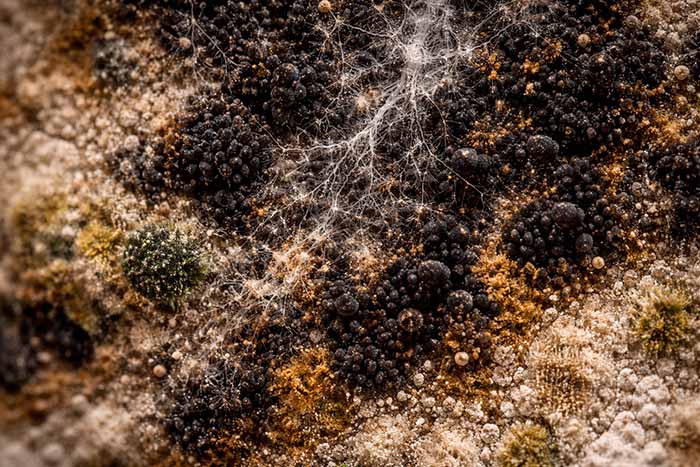
- Remediation is removal once growth is established. Killing surface mold isn’t enough — the EPA notes that “dead mold may still cause allergic reactions in some people,” so it has to be physically removed, and the moisture source corrected, or it returns.
When It’s a Job for Professional Remediation
The EPA gives homeowners a practical rule of thumb: if the moldy area is less than about 10 square feet, in most cases you can handle it yourself.[1] Beyond that, it points to professional help. In practice, that means calling a professional when:
- the affected area is larger than about 10 square feet, or there’s been extensive water damage;
- the mold came from sewage or other contaminated water (what the restoration industry calls Category 3 — see Water Damage Categories);
- the HVAC system may be involved, since running it can spread spores through the building; or
- occupants have health sensitivities and you’d rather not disturb the growth yourself.
That’s the work of professional mold remediation: inspection, containment, HEPA filtration, safe removal, correcting the moisture source, and verifying the area is clear. And because it all traces back to water, the best mold outcome starts before mold ever appears — with fast water damage restoration inside that 24–48 hour window. If you’ve had a water loss in Hattiesburg or the Pine Belt, don’t wait to see whether mold shows up. Request help or call, day or night.
Frequently Asked Questions
According to the EPA, mold can begin growing on damp materials within 24–48 hours of water exposure. That's why the response to any water loss is to dry the structure fast — the window to prevent mold is measured in hours, not days.
The CDC's own framing is careful: exposure to damp and moldy environments may cause a variety of health effects, or none at all. For some people mold can cause a stuffy nose, coughing or wheezing, and burning or itchy eyes or skin, and people with asthma or a mold allergy may have more severe reactions. It's a reason to take mold seriously and remove it — not a reason to panic.
The EPA's rule of thumb is that if the moldy area is less than about 10 square feet, you can usually handle it yourself. Larger areas, extensive water damage, mold from sewage or other contaminated water, or mold in the HVAC system are situations where the EPA advises bringing in a professional.
Usually no. Both the EPA and CDC say that if you can see or smell mold, testing is generally unnecessary — you already know you need to remove it and fix the moisture that caused it. No federal standards exist for acceptable mold levels, so a test can't tell you the home is "safe."